Oilfield Transportation Insurance
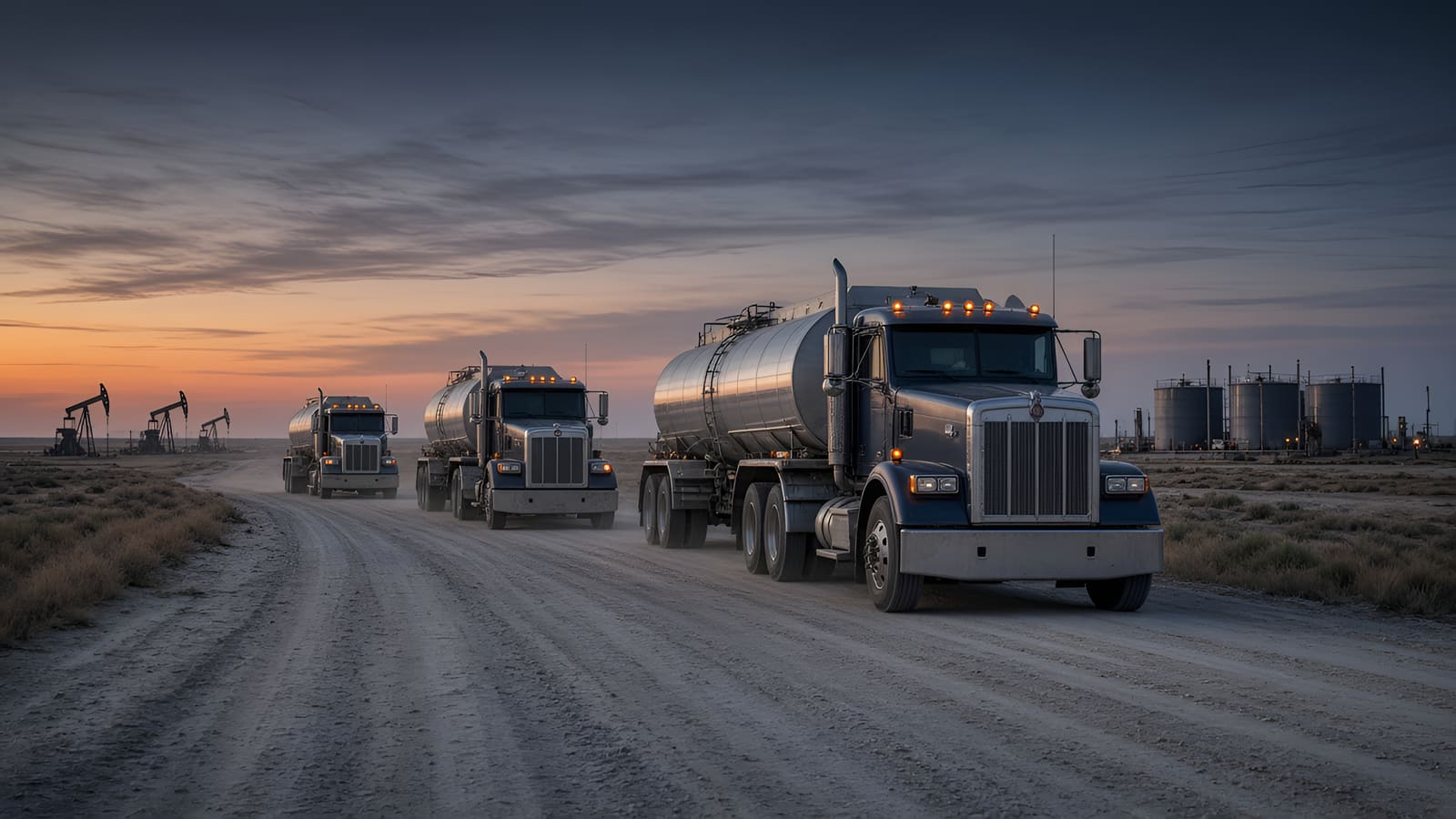
Oilfield trucking runs on long hours, remote locations, rough lease roads, and contracts written by operators who hold most of the leverage. Whether you haul crude, produced water, frac sand, equipment, or supplies, your insurance program has to satisfy master service agreements, federal motor carrier rules, and an underwriting market that pays close attention to this class.
- Coverage focus
- MSAs · Hazmat · Pollution · Auto
- Written by
- Jeff Langley, CIC
Key exposures
Auto liability
Oilfield trucks run rural highways and two-lane roads at all hours, often with heavy traffic during active development. Fatigue, unfamiliar roads, and mixed traffic with passenger vehicles create severe accident potential. Oilfield transportation is exposed to the same large-verdict environment as the rest of trucking.
Hazardous materials
Crude oil is a hazardous material for transportation purposes, which brings additional federal requirements, including higher minimum financial responsibility and filing requirements for carriers who need them.
Pollution
Spills from rollovers, overfills, or leaks can create cleanup costs and third-party claims. Standard auto and general liability policies limit pollution coverage, so many oilfield haulers need specific pollution coverage built into the program.
Master service agreements
Operators and service companies use MSAs that set indemnity terms, additional insured requirements, waivers of subrogation, and minimum limits. Many oilfield contracts use reciprocal, or knock-for-knock, indemnity. Some states, including Texas and Louisiana, have oilfield anti-indemnity statutes that affect how these provisions work. Your insurance needs to be built to support what you've agreed to.
Well site exposure
Drivers work on location around other contractors, pressurized equipment, and potential hazards such as hydrogen sulfide. Site-specific training requirements are common.
Workers' compensation
Long hours, loading and unloading, hose handling, climbing on tanks and trailers, and remote work locations drive injury exposure. Texas doesn't require most private employers to carry workers' compensation, but many MSA contracts do require it, so going without coverage can cost you work.
Physical damage and equipment
Trucks, tank trailers, vacuum trucks, and specialized equipment work hard and depreciate quickly in a rough operating environment.
What underwriters expect
Hours of service and fatigue management
FMCSA rules include specific provisions for certain oilfield operations, and underwriters want to know how you manage driver fatigue in practice, not just on paper.
Driver hiring
Experience, MVRs, and how you handle hiring pressure when activity ramps up quickly.
FMCSA compliance
Driver qualification files, drug and alcohol testing, maintenance, inspection results, and CSA data.
Hazmat programs
Training, placarding, and spill response where applicable.
Contract management
How you review MSAs, track insurance requirements, and handle certificates.
Telematics and cameras
Use, review, and coaching, especially on fatigue and speed.
Cost drivers
Auto liability is the dominant cost driver, shaped by loss history, territory, commodity hauled, and the venues where you could be sued. Rapid fleet growth with less experienced drivers is one of the fastest ways to see costs rise. Hazmat hauling and pollution exposure add cost and narrow the market.
Activity cycles matter too. When the oilfield is busy, fleets grow fast and underwriters watch driver quality closely. When it slows, revenue and fleet size change, and the program needs to flex with them. Contract requirements, especially limits and indemnity, also shape how much coverage you need to buy.
Oilfield FAQ
What does knock-for-knock indemnity mean?
It generally means each party takes responsibility for injuries to its own people and damage to its own property, regardless of fault. The exact terms vary by contract and are affected by state law.
Why do operators require so many endorsements?
Additional insured, waiver of subrogation, and primary wording help operators push risk to the contractor's insurance. Your policies need to include them in a way that matches the MSA.
Do I need pollution coverage if I only haul water?
Many water haulers should consider it. Produced water spills can create environmental claims, and standard pollution exclusions are broad.
Are oilfield hours-of-service rules different?
FMCSA includes certain provisions specific to oilfield operations, but they come with conditions. Underwriters still expect strong fatigue management.
How does a downturn affect my insurance?
Fewer trucks and less revenue usually change your exposure base, and your program may need adjusting mid-term or at renewal. Talk to your broker early when activity shifts.
- What is an MCS-90 endorsement, and do I need one?
- How does my CSA score affect my commercial truck insurance?
- How does a master service agreement affect my oilfield trucking insurance?
- Does my insurance cover pollution from a fuel spill or concrete washout?
- Why is commercial auto insurance so expensive for heavy truck fleets?
- What is a nuclear verdict, and how does it affect my fleet's insurance?